Frequently Asked Questions
The most-asked questions about catholic saints & popes.
What is this encyclopedia actually about?
It is a fan-built reference that treats Catholic saints and popes the way a wiki treats characters in a long-running saga—tracing their biographies, relationships, and the ripple effects of their decisions across centuries. You will find entries on everything from the first apostles to modern-day canonizations.
What is the difference between a saint and a pope?
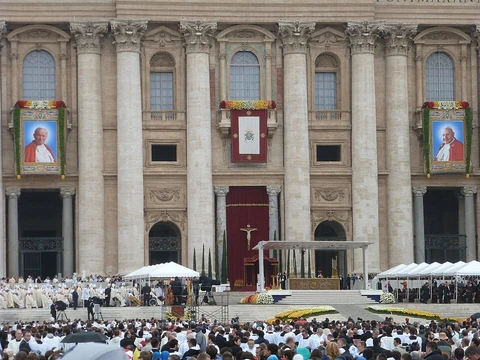
A saint is any person the Church has formally recognized for heroic virtue, while a pope is the elected head of the Roman Catholic Church. A pope can later be canonized as a saint (St. Leo the Great, St. John Paul II), but the two roles are fundamentally different: one is a spiritual honor, the other an institutional office.
Who are the most widely recognized saints?
Names like St. Francis of Assisi, St. Teresa of Ávila, St. Anthony of Padua, and St. Patrick consistently top recognition lists across different cultures and regions. In the last fifty years, St. Thérèse of Lisieux and St. Padre Pio have built especially large global followings.
Which popes tend to dominate the conversation?
St. Peter as the first, St. Leo the Great for his doctrinal stands, St. Pius V for Tridentine reform, St. John Paul II for his 26-year pontificate, and Pope Francis for his emphasis on mercy are the figures most often discussed. Each represents a pivot point that shifted the Church's direction.
How does the canonization process work?
A candidate moves through the titles Servant of God, Venerable, Blessed, and finally Saint, with each step requiring a tribunal review and, at the Blessed and Saint stages, a verified miracle attributed to the person's intercession. Popes can be canonized too, though it is rarer because the same institution that once led them now judges their cause.
Where should a first-time reader begin?
Start with the early apostles and the first handful of popes to build a historical spine, then follow your curiosity into a specific lane—martyrs, mystics, missionaries, social reformers. Every entry cross-links to related figures, so the site naturally pulls you deeper once you find a thread you like.
Roughly how many saints has the Church recognized?
The Vatican's official register lists thousands of canonized individuals, with new names added at papal audiences and synods. If you also count regional or pre-modern saints honored before the centralized process took shape, the total climbs well beyond the official count.
What are some of the most dramatic moments in this story?
The Great Schism of 1054, the Avignon Papacy, the Council of Trent, and the 1981 assassination attempt on St. John Paul II are frequently cited as turning points on the papal side. Among saints, the mass martyrdoms of the early centuries and the ecstatic visions of St. Teresa of Ávila stand out as particularly vivid episodes.
Does the encyclopedia take a doctrinal position?
No; it is a fan reference, so entries present biographical, historical, and cultural context without endorsing or challenging any teaching. The aim is to help readers understand who these figures were, what they did, and why they continue to matter in the larger narrative.
How is the site organized?
Entries are grouped by era, by role (pope, bishop, mystic, martyr, etc.), and by region, with a continuous timeline threading through the whole site. Cross-links between related saints and popes let you follow connections the way you would trace a character's relationships across seasons of a series.