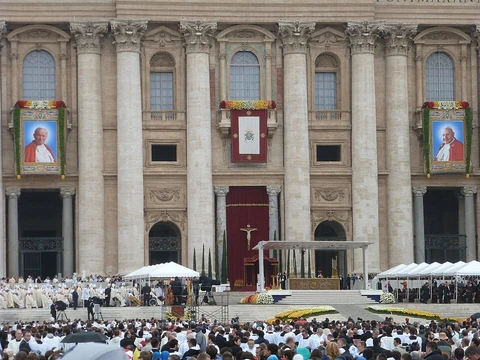
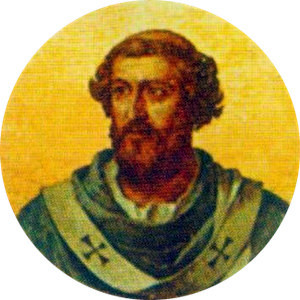
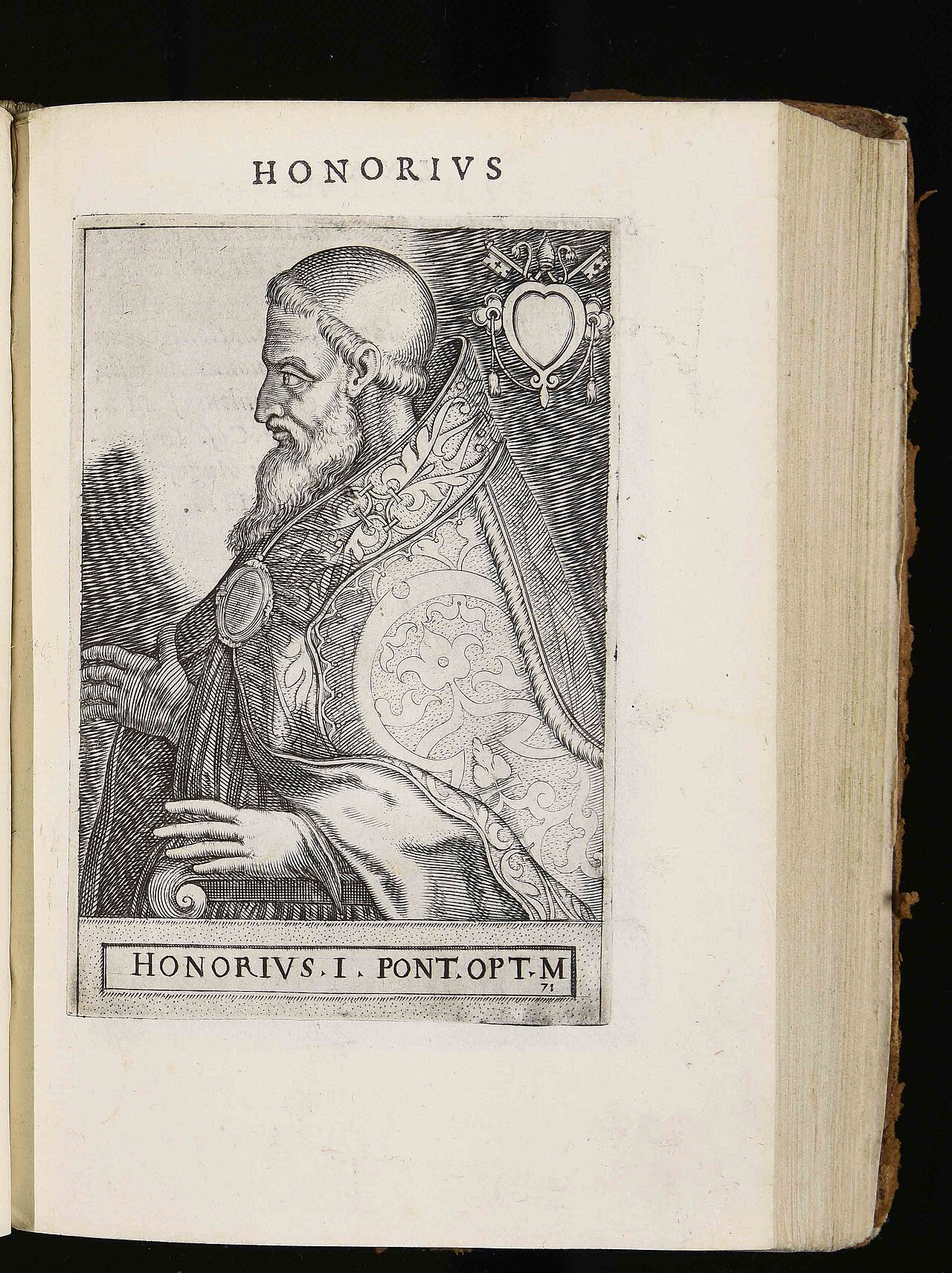
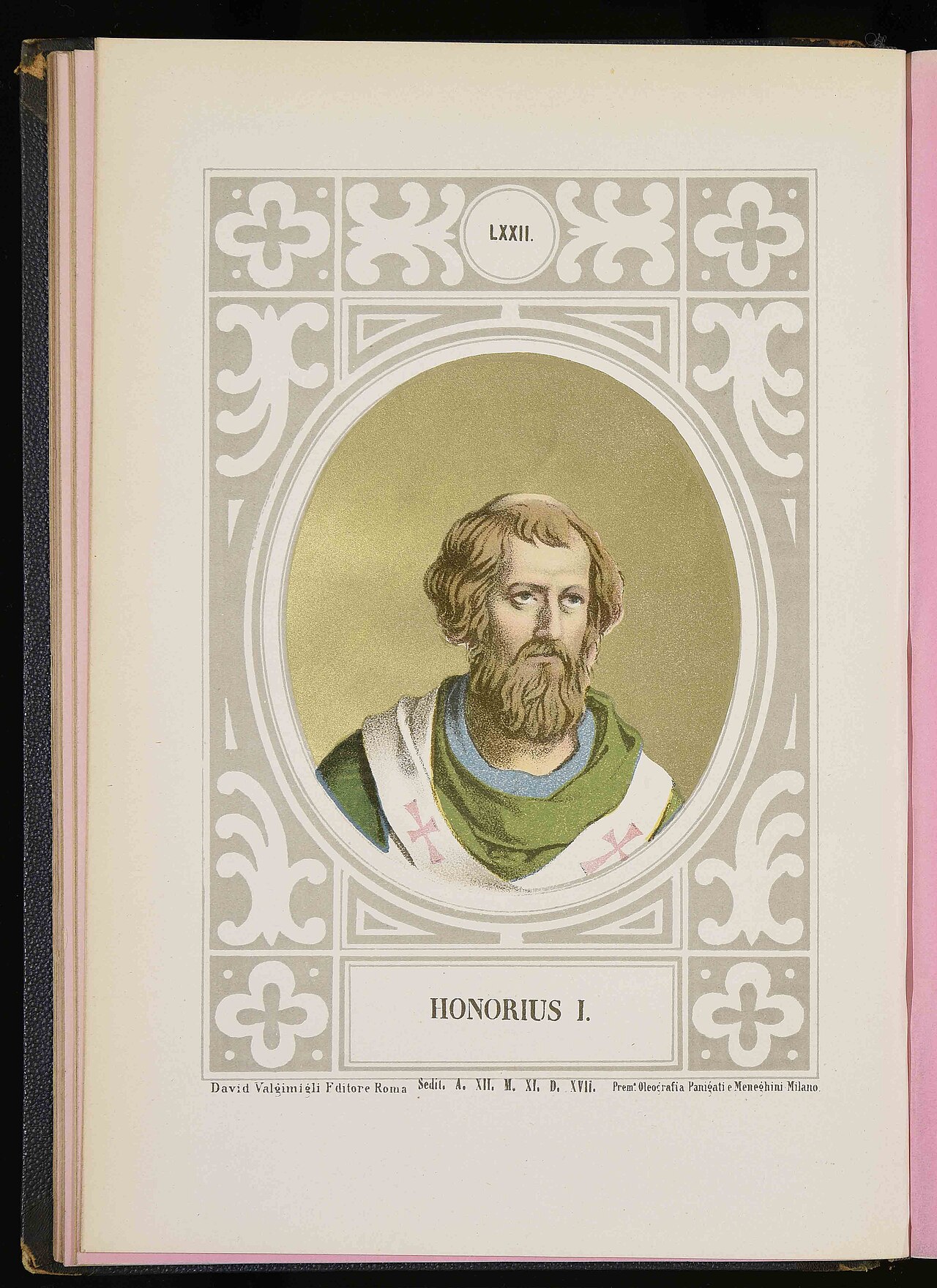
Pope Honorius I
Pope condemned posthumously for Monothelite correspondence.

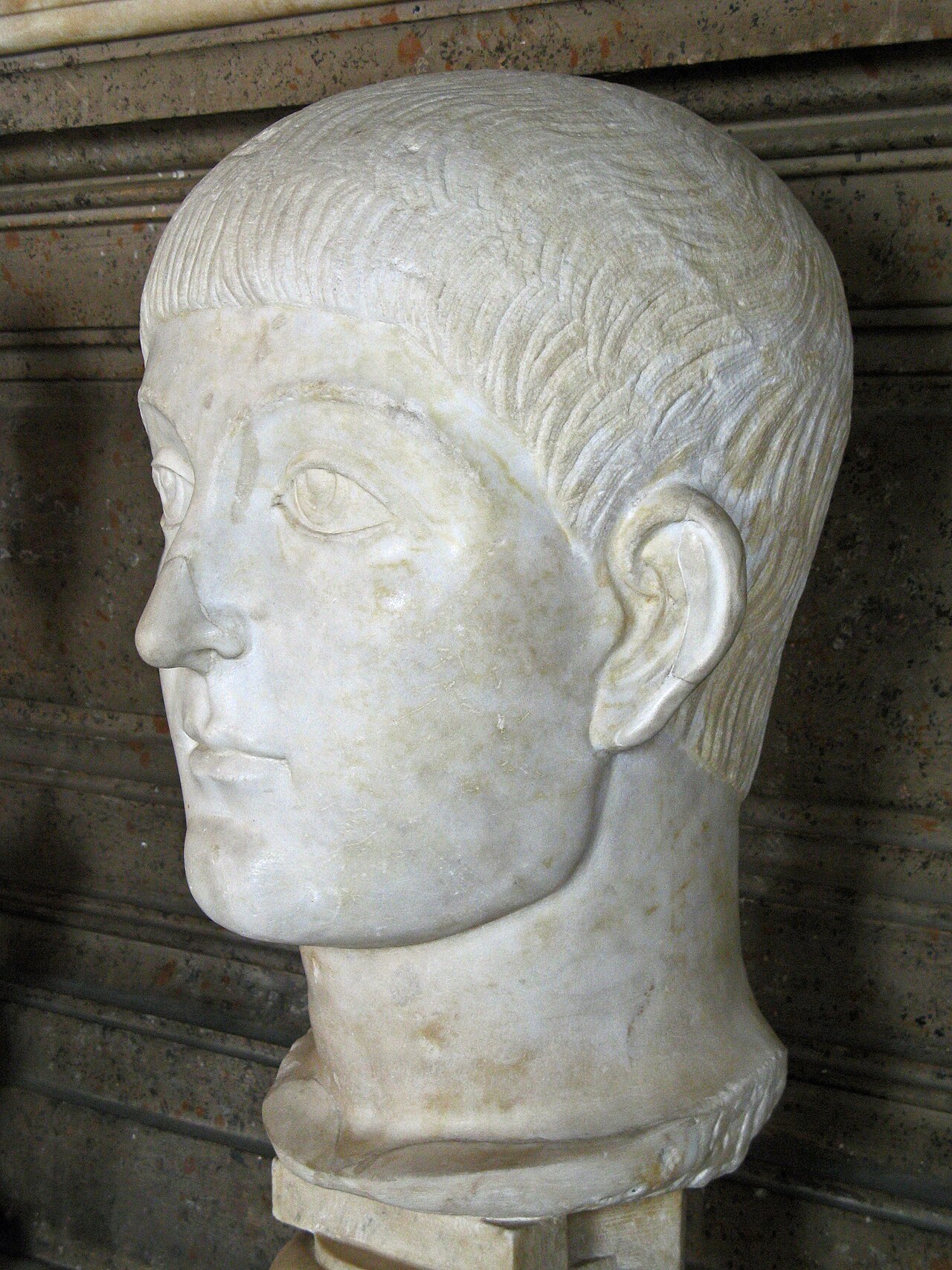
Mark Landon ( user:Choliamb ) · CC BY 4.0
- born
- Campania
- field
- Bishop of Rome (Pope)
- nationality
- Roman (Campania)
- known_for
- Correspondence with Patriarch Sergius I; posthumous anathematization for Monothelitism; support of Anglo-Saxon Christianisation
Lore & Background
Honorius I was a wealthy aristocrat born in Campania, the son of Petronius, who held the honorary title of consul. The short vacancy is attributed by historians to the presence in Rome of Isaac the Armenian, the imperial exarch of Italy, who was empowered to confirm the election. As pope, Honorius modeled his papacy after Gregory I and employed monks in the administration of the Lateran Palace. He supported the Christianisation of Anglo-Saxon England by sending Saint Birinus to convert the West Saxons and bestowing the pallium on the archbishops of York and Canterbury. He also worked to persuade the Irish and British churches to adopt the Roman Easter computus, though with limited success.
Reader's Guide
Honorius I's legacy is dominated by his involvement in the Monoenergism and Monothelite controversies. Pope Leo II confirmed the condemnation, charging Honorius with failing to extinguish the heresy. Defenders, including his secretary Abbot John Symponus and St. Maximus the Confessor, argued that Honorius spoke only of Christ's human will, not the divine. Later historians, such as J. B. Bury and Louis Nazaire Bégin, suggested Honorius did not fully understand the theological issue and was condemned more for imprudent silence than formal heresy.
Did You Know?
- He sent Saint Birinus to convert the West Saxons and bestowed the pallium on the archbishops of York and Canterbury.
Gallery
Frequently Asked Questions
What is Pope Honorius I most known for?
He is best remembered for his letters to Patriarch Sergius I of Constantinople, in which he appeared to endorse the Monothelite formula that Christ possessed only one divine energy. This correspondence later became the basis for his posthumous condemnation.
More in Catholic Saints & Popes 25-27
Elsewhere in the Catholic Saints & Popes universe
Spotted an error? Know more?
This is a living reference — every entry is fact-audited, and reader corrections feed straight into our audit queue. Suggest an edit · See this site's audit record