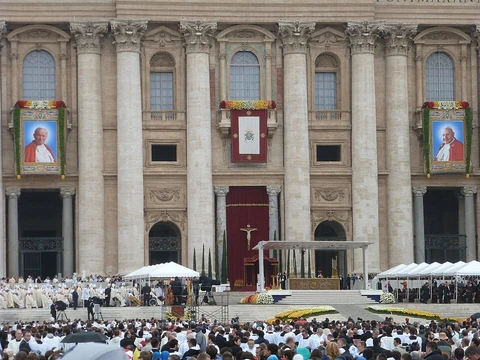
Pope Gregory I
Pope, reformer, and one of the four Great Latin Church Fathers.
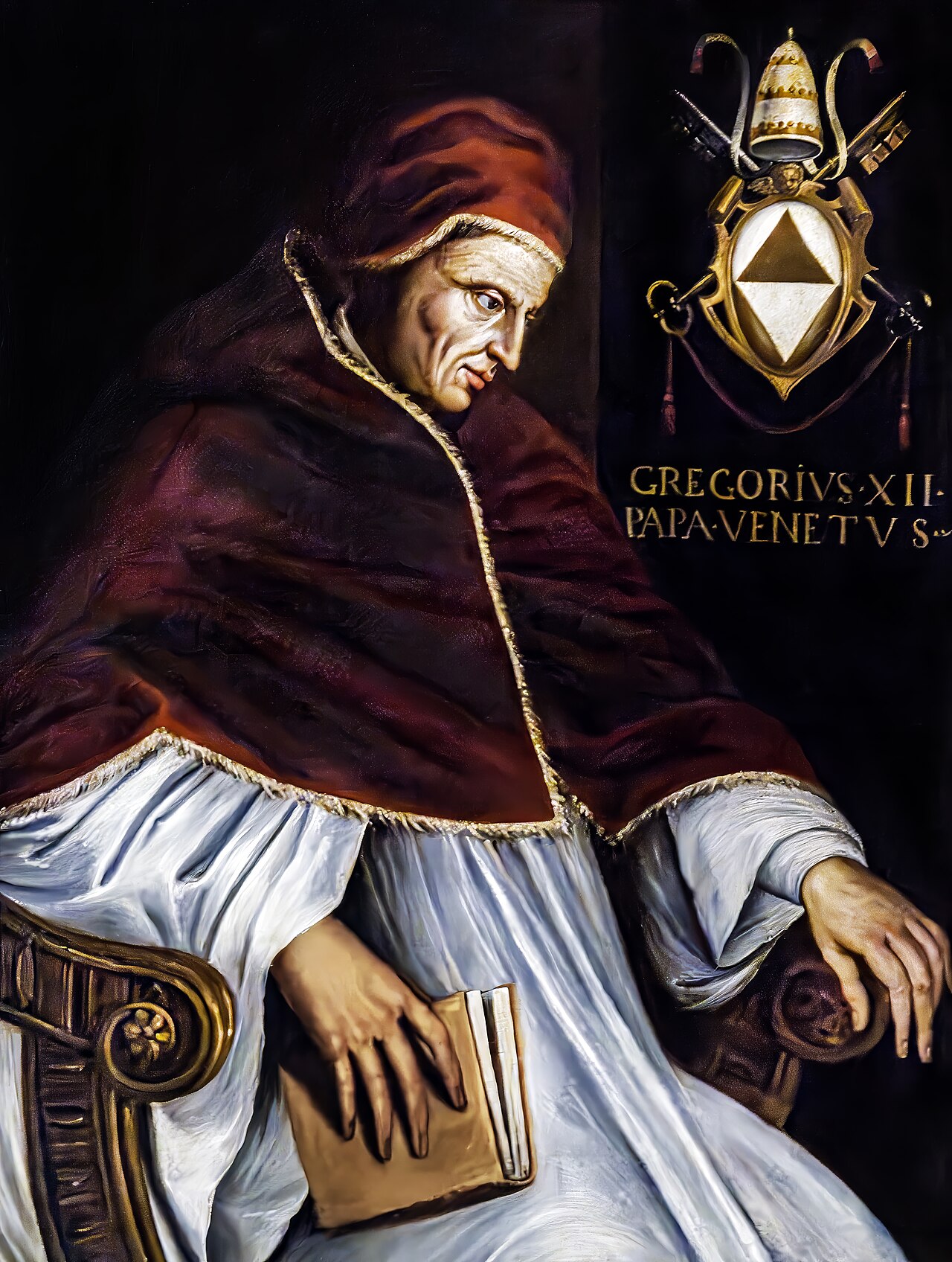
Pope Gregory I (c. 540 – 12 March 604), also known as Saint Gregory the Great, served as the 64th Bishop of Rome from 3 September 590 until his death. Born into a wealthy Roman senatorial family, he became Prefect of Rome at age 30, then founded a monastery on his family estate and lived there before serving as a papal ambassador and eventually pope. As pope, his administration did more to improve the welfare of Rome’s people than the emperors Maurice and Theodosius. He reasserted papal authority in Spain and France, and sent missionaries to England, including Augustine of Canterbury and Paulinus of York. By shifting barbarian groups like the Franks, Lombards, and Visigoths from Arian Christianity to alignment with Rome, he helped shape medieval Europe. He also fought the Donatist heresy, especially strong in North Africa.
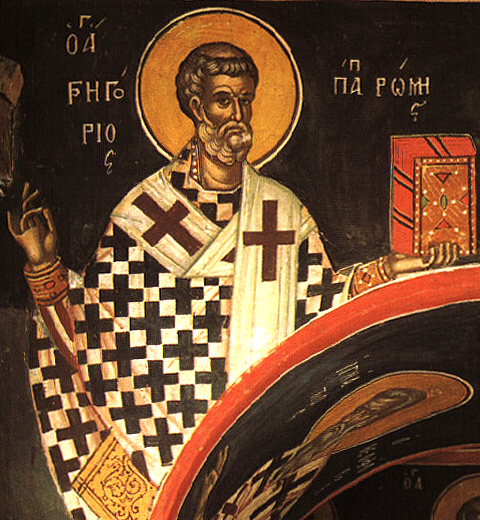
Gregory wrote more than any previous pope. In Eastern Christianity, he is called Saint Gregory the Dialogist because of his *Dialogues*. During the Middle Ages, he was known as “the Father of Christian Worship” for his major revisions to Roman liturgy. His work on the Divine Liturgy of the Presanctified Gifts, still used in the Byzantine Rite, is so significant that he is generally considered its de facto author. Alongside Augustine, Jerome, and Ambrose, he is honored as one of the four Great Latin Church Fathers. He was canonized by popular acclaim immediately after his death. He is the second of three popes listed in the *Annuario Pontificio* with the title “the Great,” after Leo I and before Nicholas I.
Gregory was born around 540 in Rome, recently reconquered by the Eastern Roman Empire from the Ostrogoths. His parents named him Gregorius, which the medieval writer Ælfric of Eynsham explained as a Greek name meaning “Watchful” in Latin. Ælfric added that Gregory “was very diligent in God’s Commandments.” His father, Gordianus, was a patrician, senator, and former Prefect of Rome, who also held the church office of Regionarius. His mother, Silvia, was well-born; her married sister Pateria lived in Sicily. Both of Gregory’s parents and two paternal aunts, Trasilla and Emiliana, are recognized as saints. His great-great-grandfather was Pope Felix III. Gregory’s own election made his family the most distinguished clerical dynasty of the time.
The family lived in a villa on the Clivus Scauri on the Caelian Hill (now Via di San Gregorio), near the ruins of the imperial palaces on the Palatine, the Colosseum, and the Circus Maximus. They also owned working estates in Sicily and around Rome. After his death, Gregory had portraits of his parents frescoed in that home; 300 years later, John the Deacon described them: Gordianus was tall, long-faced, light-eyed, and bearded; Silvia was tall, round-faced, blue-eyed, and cheerful. Gregory had a brother whose name and fate are unknown.
Italy was in turmoil when Gregory was born. The Plague of Justinian swept through from 542, causing famine, panic, and riots; in some areas, over a third of the population died, with deep spiritual and emotional effects. Politically, the Western Roman Empire had fallen to Gothic kings, but during the 540s Emperor Justinian I gradually retook Italy from the Goths. Most fighting was in the north, so young Gregory likely saw little of it. Rome was sacked and emptied by Totila in 546, but in 549 he invited survivors back. It is thought Gregory and his family may have retired to their Sicilian estates during that time, returning in 549. The war ended in Rome by 552, and a Frankish invasion was defeated in 554.
Like most young men of his social rank, Gregory was well educated in grammar, rhetoric, sciences, literature, and law, excelling in all. Gregory of Tours wrote that “in grammar, dialectic and rhetoric … he was second to none.” He wrote correct Latin, though his claim not to know Greek seems exaggerated given his excellent education and time in Constantinople. His first language was Piedmontese. He knew Latin authors, natural science, history, mathematics, and music, and had such fluency with imperial law that he may have trained in it for a public career. He became a government official, rising quickly to become Prefect of Rome—the city’s highest civil office—at just 33. After his death, the monks of the Monastery of St. Andrew, which he had founded at his ancestral home on the Caelian, made a portrait of him, described by John the Deacon.
- known_for
- Papal administration, missionary work, Dialogues, liturgical reforms
Lore & Background
Gregory was born c. 540 in Rome into a wealthy noble Roman family with close connections to the church. His father, Gordianus, was a patrician who served as a senator and for a time was the Prefect of the City of Rome. His mother, Silvia, was well-born, and both are honored as saints. Gregory's great-great-grandfather had been Pope Felix III. He was well educated, learning grammar, rhetoric, the sciences, literature, and law; he excelled in all these fields. He became a government official, advancing quickly to become Prefect of Rome at only thirty-three years old. On his father's death, Gregory converted his family villa into a monastery dedicated to Andrew the Apostle. Eventually, Pope Pelagius II ordained Gregory a deacon and chose him as apocrisiarius (ambassador to the imperial court in Constantinople) from 579 to 586, where he sought military aid against the Lombards.
Reader's Guide
Gregory's papacy (590–604) marked a turning point in medieval Europe. He regained papal authority in Spain and France and sent missionaries to England, including Augustine of Canterbury and Paulinus of York. The realignment of barbarian allegiance to Rome from their Arian Christian alliances shaped medieval Europe; Gregory saw Franks, Lombards, and Visigoths align with Rome in religion. He also combated the Donatist heresy, popular particularly in North Africa at the time. Gregory is also well known for his writings, which were more prolific than those of any of the previous popes. The epithet Saint Gregory the Dialogist has been attached to him in Eastern Christianity because of his Dialogues. Throughout the Middle Ages, he was known as 'the Father of Christian Worship' because of his exceptional efforts in revising the Roman worship of his day. His contributions to the development of the Divine Liturgy of the Presanctified Gifts, still in use in the Byzantine Rite, were so significant that he is generally recognized as its de facto author. He is the second of the three Popes listed in the Annuario Pontificio with the title 'the Great', alongside Popes Leo I and Nicholas I.
Did You Know?
- Gregory was the prefect of Rome at age 30, the highest civil office in the city.
- His great-great-grandfather had been Pope Felix III.
- He served as apocrisiarius (ambassador) to the imperial court in Constantinople from 579 to 586.
- Gregory is one of only three popes listed in the Annuario Pontificio with the title 'the Great', alongside Leo I and Nicholas I.
- He is generally recognized as the de facto author of the Divine Liturgy of the Presanctified Gifts, still used in the Byzantine Rite.
From Prefect to Pontiff: A Career of Service
Gregory's path to the papal throne was neither sudden nor unremarkable within the Roman aristocracy. The son of a senator who had himself served as Prefect of the City, Gregory followed a similar trajectory into public life, reaching that same highest civil office at just thirty-three years old. Yet his ambitions extended well beyond governance. He established a monastery on his family's ancestral estate on the Caelian Hill, a move that signaled a deepening spiritual commitment. After serving as a papal ambassador, he was elevated to the 64th Bishop of Rome in September 590. His pontificate, lasting until his death in March 604, was marked by an extraordinary administrative record. Contemporary accounts note that his efforts to improve the material welfare of Rome's citizens surpassed those of the reigning emperors Maurice and Theodosius. He also worked to restore papal jurisdiction in Spain and France, and dispatched missionaries—most notably Augustine of Canterbury and Paulinus of York—to the English kingdoms, extending Rome's spiritual reach across the Channel.
Reshaping the Religious Map of Europe
Gregory's most far-reaching political achievement was the gradual realignment of the barbarian kingdoms of Europe away from their Arian Christian alliances and toward the religious authority of Rome. Over the course of his pontificate, the Franks, Lombards, and Visigoths each shifted their allegiance, a transformation that would shape the religious and cultural contours of medieval Europe for centuries. In North Africa, he waged a sustained campaign against the Donatist heresy, which remained popular in that region despite its earlier condemnation. These efforts were not merely theological; they represented a consolidation of institutional power. By binding the emerging post-Roman kingdoms to Rome in matters of faith, Gregory effectively created a new framework of political and spiritual hierarchy that outlasted the imperial structures he inherited. His dispatch of missionaries to England further extended this network, planting Roman ecclesiastical authority in a region previously outside its orbit.
The Dialogist and the Father of Worship
In the medieval imagination, Gregory occupied a singular place in the history of Christian liturgy and theology. His literary output was more voluminous than that of any pope who preceded him, and his work the Dialogues earned him the enduring epithet 'the Dialogist' in Eastern Christian tradition. Throughout the Middle Ages, he was celebrated as 'the Father of Christian Worship' for his comprehensive revision of Roman liturgical practice. His influence extended even into the Byzantine world: his contributions to the Divine Liturgy of the Presanctified Gifts were so foundational that he is generally recognized as its de facto author, and that rite remains in use to this day. Beyond liturgy, Gregory is counted among the four Great Latin Church Fathers, alongside Augustine, Jerome, and Ambrose. He was canonized by popular acclaim immediately following his death in 604, and in the modern Annuario Pontificio he stands as the second of only three popes to bear the title 'the Great,' a distinction shared solely with Leo I and Nicholas I.
A Noble Boyhood in a Shattered World
Gregory entered the world around 540 in a Rome still reeling from the Gothic wars and the devastation of the Plague of Justinian, which had swept through Italy beginning in 542, killing over a third of the population in some areas. His father, Gordianus, was a patrician senator who had served as Prefect of the City and held a church position as Regionarius; his mother, Silvia, came from equally distinguished stock. The family's great-great-grandfather had been Pope Felix III, making Gregory's eventual election to the papacy the crowning achievement of what was the most prominent clerical dynasty of the era. Their principal residence was a villa on the Caelian Hill, near the ruins of the Colosseum and Circus Maximus, with additional working estates in Sicily and around Rome. Gregory received a thorough classical education in grammar, rhetoric, law, and the sciences, and the historian Gregory of Tours later declared him unmatched in dialectic and rhetoric. He was, by all accounts, a prodigy of his class.
Gallery
Frequently Asked Questions
Who is Pope Gregory I?
Pope Gregory I, widely called Saint Gregory the Great, held the papal throne from 590 until his death in 604 as the 64th pope. He is counted among the four Great Latin Church Fathers and is remembered for his administrative skill, missionary outreach, and prolific theological writing.
What did Pope Gregory I actually do as pope?
He reorganized food distribution and public works to support Rome's struggling population while extending papal authority into regions like North Africa and Spain. He also sent Augustine and a band of monks to convert the Anglo-Saxons, and he reshaped the Western liturgical calendar and chant traditions.
How did Gregory I end up becoming pope?
A son of a Roman senator, he first served as prefect of the city, then abandoned politics to live as a monk and later act as papal ambassador in Constantinople. After the death of Pope Pelagius II in 590, the Roman clergy and people chose him as their new bishop.
Why do Catholics consider Gregory I so important?
His papacy is often treated as the moment the Roman see began to function as a truly universal, centralized institution rather than a local bishopric. His Dialogues and scriptural commentaries became standard reading in medieval monasteries and still anchor Catholic understanding of the early saints.
What are Gregory I's most famous writings?
The Dialogues, a four-volume collection of hagiographies, is his signature work and remains a key source for stories of early Western saints. He also left behind extensive homilies, a commentary on the Book of Job, and a large correspondence that reveals his day-to-day governance of the Church.
More in Catholic Saints & Popes 1-24
Spotted an error? Know more?
This is a living reference — every entry is fact-audited, and reader corrections feed straight into our audit queue. Suggest an edit · See this site's audit record