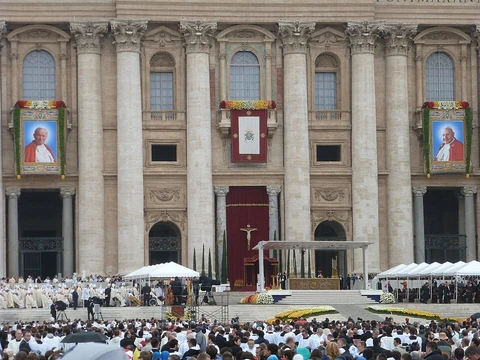
Luke the Evangelist
Evangelist, physician, and author of Luke–Acts.

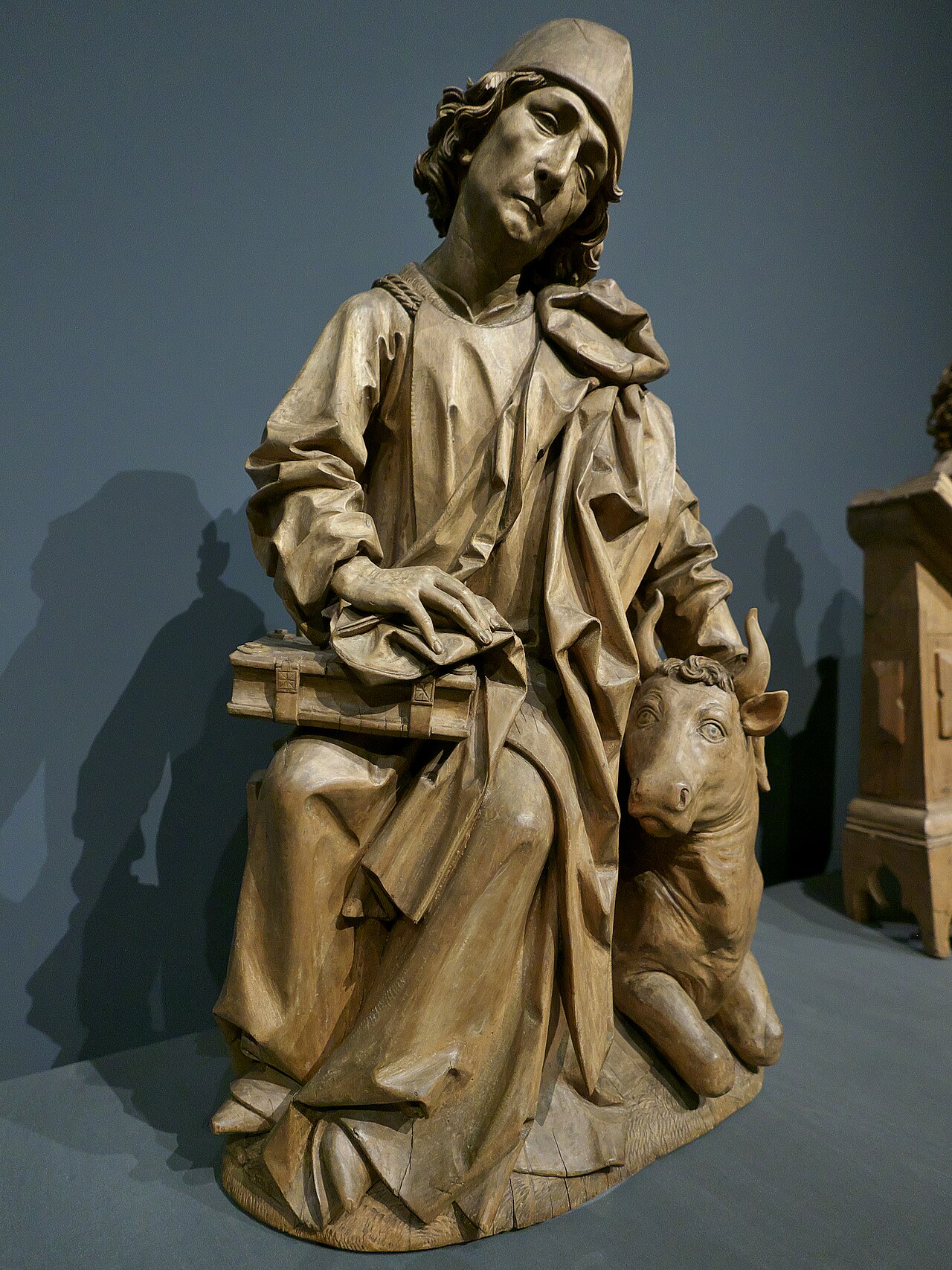
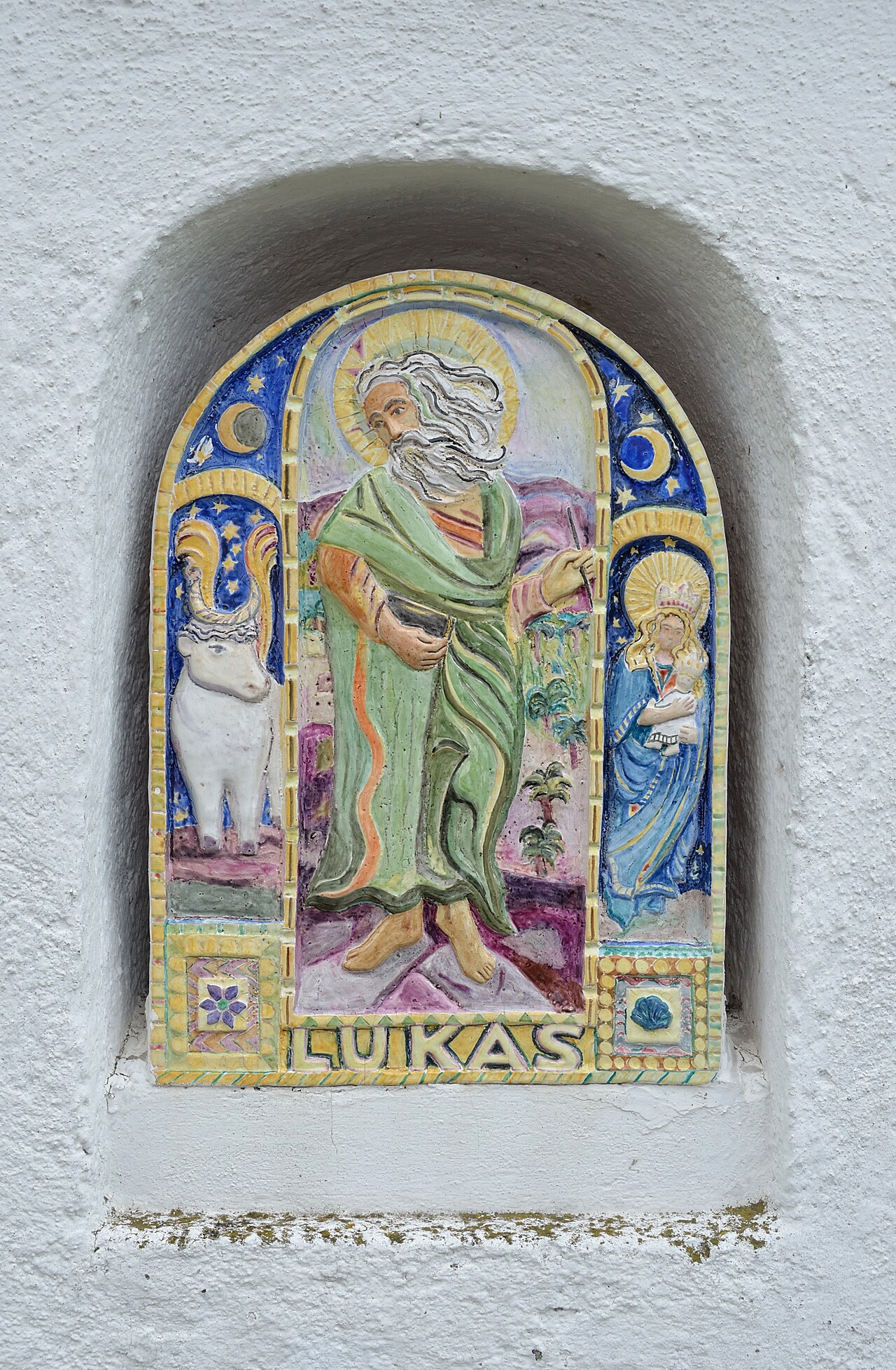
Herzi Pinki · CC BY-SA 3.0 at
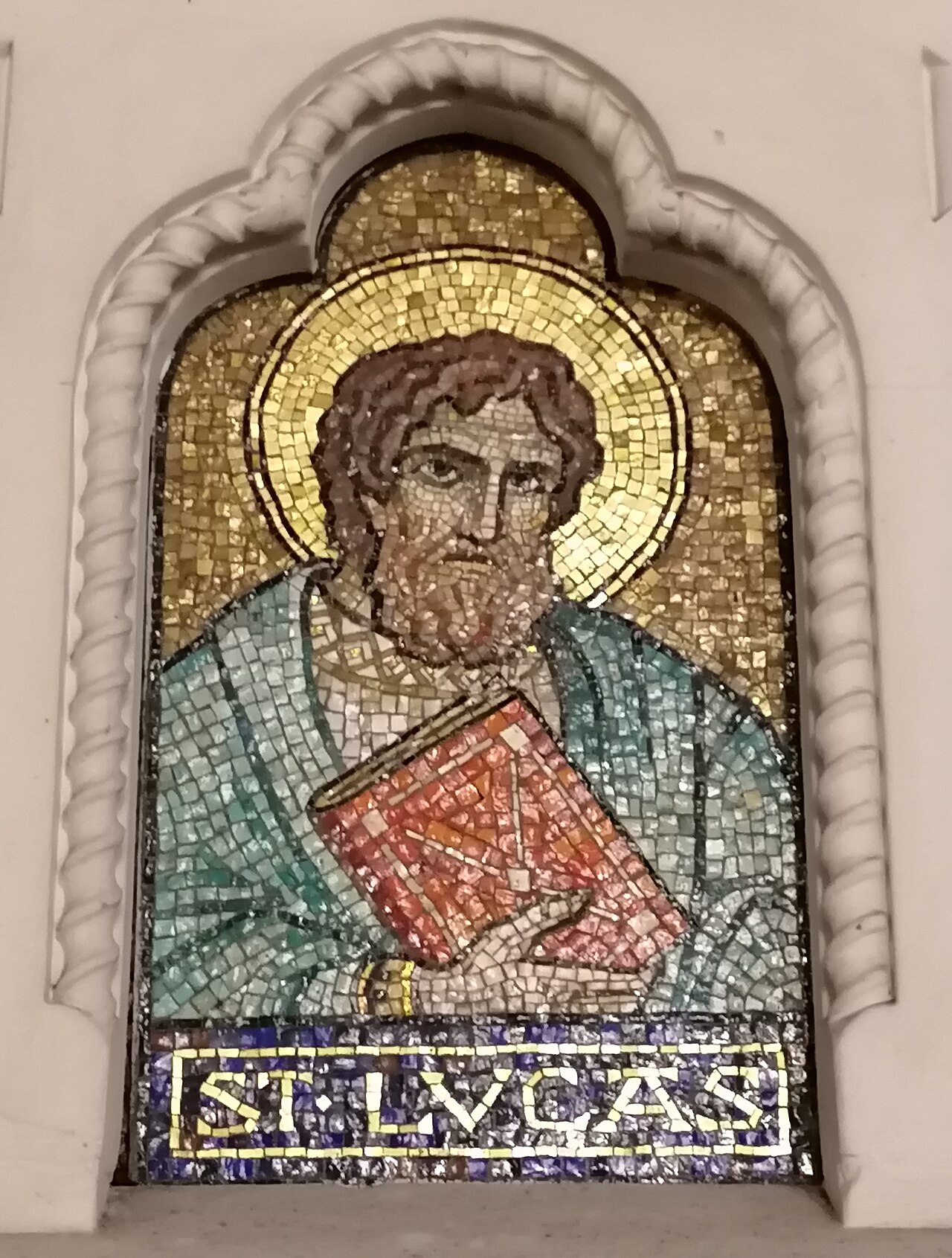
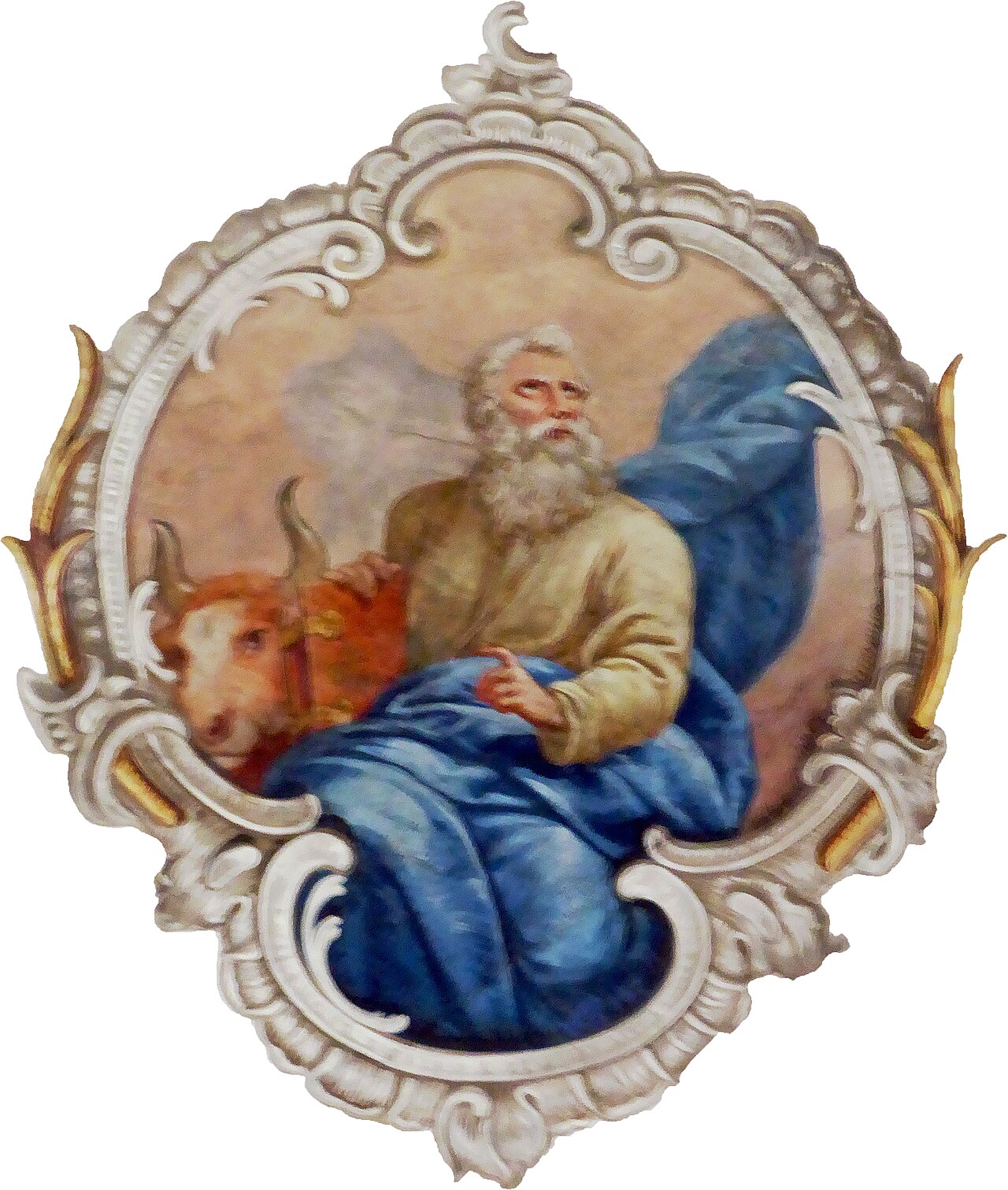
Luke the Evangelist is one of the Four Evangelists, the traditionally ascribed authors of the canonical gospels. The Early Church Fathers credited him with authorship of both the Gospel of Luke and the Acts of the Apostles, a two-volume work that constitutes the largest contribution by a single author to the New Testament. He is venerated as a saint in major Christian denominations and is considered a patron saint of artists, physicians, and others.
- field
- Evangelist, physician, historian
- known_for
- Authorship of the Gospel of Luke and Acts of the Apostles
- nationality
- Uncertain; possibly a Greek from Antioch or a Hellenic Jew
- died
- Age 84 in Boeotia, according to a fairly early and widespread tradition
- feast_day
- 18 October
Lore & Background
Luke is mentioned briefly in the New Testament, with the Epistle to the Colossians referring to him as a physician. He is thought to have been both a physician and a disciple of Paul. His earliest mention is in the Epistle to Philemon, and he is also noted in Colossians and 2 Timothy. Epiphanius states Luke was one of the Seventy Apostles, and John Chrysostom suggests the 'brother' in 2 Corinthians 8:18 might be Luke or Barnabas. The use of 'we' in Acts indicates he was a traveling companion of Paul, present in Troas, Philippi, and on the journey to Rome. Scholars believe Luke was highly educated, based on the quality of Greek in Luke–Acts and his allusions to classical authors such as Homer, Euripides, and Plato. Whether he was a gentile or a Hellenized Jew is debated; a comment in Colossians differentiating Luke from 'those of the circumcision' has led some to conclude he was a gentile, making him possibly the only non-Jewish New Testament writer. He died at age 84 in Boeotia, and his relics were reportedly transferred to Constantinople in 357.
Reader's Guide
Luke the Evangelist holds a central place in Christian tradition as the author of the Gospel of Luke and the Acts of the Apostles, together comprising over a quarter of the New Testament. His writings are noted for their historical style, with Luke 1:1–4 situating the work within Greek historiography. Scholarly opinion on his authorship is roughly evenly divided near the end of the 20th century, but early manuscript evidence and patristic testimony support the attribution. Luke's legacy includes his role as a patron saint of artists, physicians, and others, reflecting his traditional identity as a physician. His feast day is 18 October. The accuracy of his historical accounts is debated: some archaeologists and classicists praise his precision, while others question his reliability due to supernatural elements. Regardless, Luke–Acts remains a foundational text for understanding early Christian history and theology.
Did You Know?
- Luke is the only New Testament writer who may clearly be identified as not Jewish, though some scholars consider him a Hellenized Jew.
- The Gospel of Luke and Acts of the Apostles together account for 27.5% of the New Testament, the largest contribution by a single author.
- Luke is believed to have been martyred by hanging from an olive tree, though some dispute this.
- The earliest manuscript of the Gospel (Papyrus 75, c. AD 200) ascribes the work to Luke.
The Puzzle of Identity
Who exactly was the Mark behind the Gospel that bears his name? This question has generated centuries of debate. William Lane, writing in 1974, noted that an unbroken tradition links Mark the Evangelist with John Mark, the cousin of Barnabas mentioned in Paul's letters. Yet the early writer Hippolytus of Rome drew a sharper distinction, treating Mark the Evangelist, John Mark of the Acts narratives, and Barnabas's cousin as three separate individuals, all belonging to the Seventy Disciples sent out by Jesus. The Coptic Church rejects this fragmentation, insisting all three designations point to a single person who hosted the apostles after the crucifixion and in whose home the risen Christ appeared. Modern scholarship has not resolved the tangle. Some researchers accept that a figure named Mark authored the gospel, while others argue the writer was someone entirely outside the New Testament's cast of characters. The result is a figure whose very identity remains one of early Christianity's most contested questions.
Founding the Alexandrian See
According to Eusebius of Caesarea, Mark arrived in Alexandria in the third year of Emperor Claudius, around AD 43, after accompanying the apostle Peter on a journey that took him from Antioch through Asia Minor and into Rome. Coptic tradition extends his Egyptian presence even further, placing him in the region for four or five years before his formal arrival. There he established what would become one of the five most important episcopal sees in early Christianity. The Coptic Orthodox Church, the Greek Orthodox Church of Alexandria, and the Coptic Catholic Church all trace their institutional lineage back to this founding community. Elements of the Coptic liturgical tradition are attributed directly to Mark's own practice. He is venerated as the first bishop of Alexandria and as the figure who planted Christianity in Africa. Eusebius records that Mark was succeeded by Anianus as bishop in the eighth year of Nero's reign, around 62 or 63 AD, a transition that may have been prompted by Mark's approaching death. His legacy as the architect of an entire ecclesiastical tradition endures to this day.
The Anonymous Gospel and the Authorship Question
The four canonical gospels, like many ancient texts, do not name their authors. Yet the earliest surviving evidence linking a specific individual to the Gospel of Mark comes from Papias, a second-century writer. Scholars at Trinity Evangelical Divinity School consider it nearly certain that Papias had John Mark in mind, though mainstream critical scholars find his testimony difficult to parse. The dominant position among modern academics is that the gospel is anonymous. A subset of researchers goes further, denying that anyone named Mark wrote it. Others propose the author was a Mark unconnected to the New Testament's known figures. Geographic arguments have been wielded on both sides: Leach, Wells, and Hatina contend the writer displayed poor knowledge of the region's terrain, while Heidi Roskam points to accurate topographical details in chapters one through four and eight through nine. Michael Kok pushes back against the very premise of geographic ignorance. Several scholars describe the author as a Hellenized Jew living outside Palestine, unfamiliar with local Jewish customs. The Routledge Encyclopedia of the Historical Jesus settles on the cautious conclusion that the writer was named Mark, but which Mark remains undetermined.
Martyrdom, Symbol, and Enduring Veneration
Coptic tradition places Mark's birth in Cyrene, a city in the Pentapolis of North Africa, in what is now Libya—a claim not shared by other Christian denominations. His life in Alexandria ended in violence. According to later Coptic accounts, the city's pagans, angered by his attempts to draw Alexandrians away from their traditional gods, strangled him with a rope and dragged his body through the streets in AD 68. Eusebius, writing earlier, suggests his death came around 62 or 63, when he was succeeded by Anianus. Beyond the historical record, Mark occupies a rich place in Coptic devotional memory: he is said to have hosted the disciples after the crucifixion, to have been the home where the risen Christ appeared, and to have been present at Pentecost in the same house. Coptic tradition even casts him among the servants at the Marriage at Cana who poured the water Jesus transformed into wine. His feast day falls on April 25, and his traditional symbol is the winged lion—a pairing that has made his image one of the most recognizable in Christian iconography across the Mediterranean world.
Gallery

Frequently Asked Questions
Who is Luke the Evangelist?
Luke is one of the Four Evangelists traditionally credited with authoring the Gospel of Luke and the Acts of the Apostles. He is also remembered as a physician and a careful chronicler, and he is venerated as a saint in major Christian denominations.
What did Luke the Evangelist write?
He is the traditional author of both the Gospel of Luke and the Acts of the Apostles, a two-part work that stands as the single largest contribution by one writer to the New Testament.
What is Luke the Evangelist the patron saint of?
He is invoked as the patron of artists, physicians, and bankers, a set of patronages that reflects his traditional identity as a healer and a meticulous recorder of events.
How did Luke the Evangelist die?
A fairly early and widespread tradition holds that he lived to the age of 84 and passed away in Boeotia, though the precise circumstances of his death are not firmly established.
Why is Luke the Evangelist important in Catholic tradition?
His combined work of Luke and Acts provides the backbone of the New Testament's narrative arc, and the Early Church Fathers consistently attributed both volumes to him. His liturgical feast is observed each year on 18 October.
More in Catholic Saints & Popes 1-24
Elsewhere in the Catholic Saints & Popes universe
Spotted an error? Know more?
This is a living reference — every entry is fact-audited, and reader corrections feed straight into our audit queue. Suggest an edit · See this site's audit record