Matteo Ricci
Italian Jesuit who bridged Europe and Ming China through science and faith.

Antonio Fraioli · CC BY-SA 4.0
Matteo Ricci (6 October 1552 – 11 May 1610) was an Italian Jesuit who served in the court of Ming dynasty China and one of the founding figures of the Jesuit China missions. He created the Kunyu Wanguo Quantu, a 1602 world map written in Chinese characters, and became the first European to enter the Forbidden City of Beijing in 1601 when invited by the Wanli Emperor. In 2022, the Apostolic See declared its recognition of Ricci's heroic virtue, bestowing upon him the honorific of a Venerable.
- born
- 6 October 1552, Macerata, Papal States
- died
- 11 May 1610, Beijing, Ming dynasty China
- field
- Missionary, mathematician, cartographer, astronomer
- nationality
- Italian
- known_for
- Kunyu Wanguo Quantu world map; first European to enter the Forbidden City; trans
Verified Timeline
Lore & Background
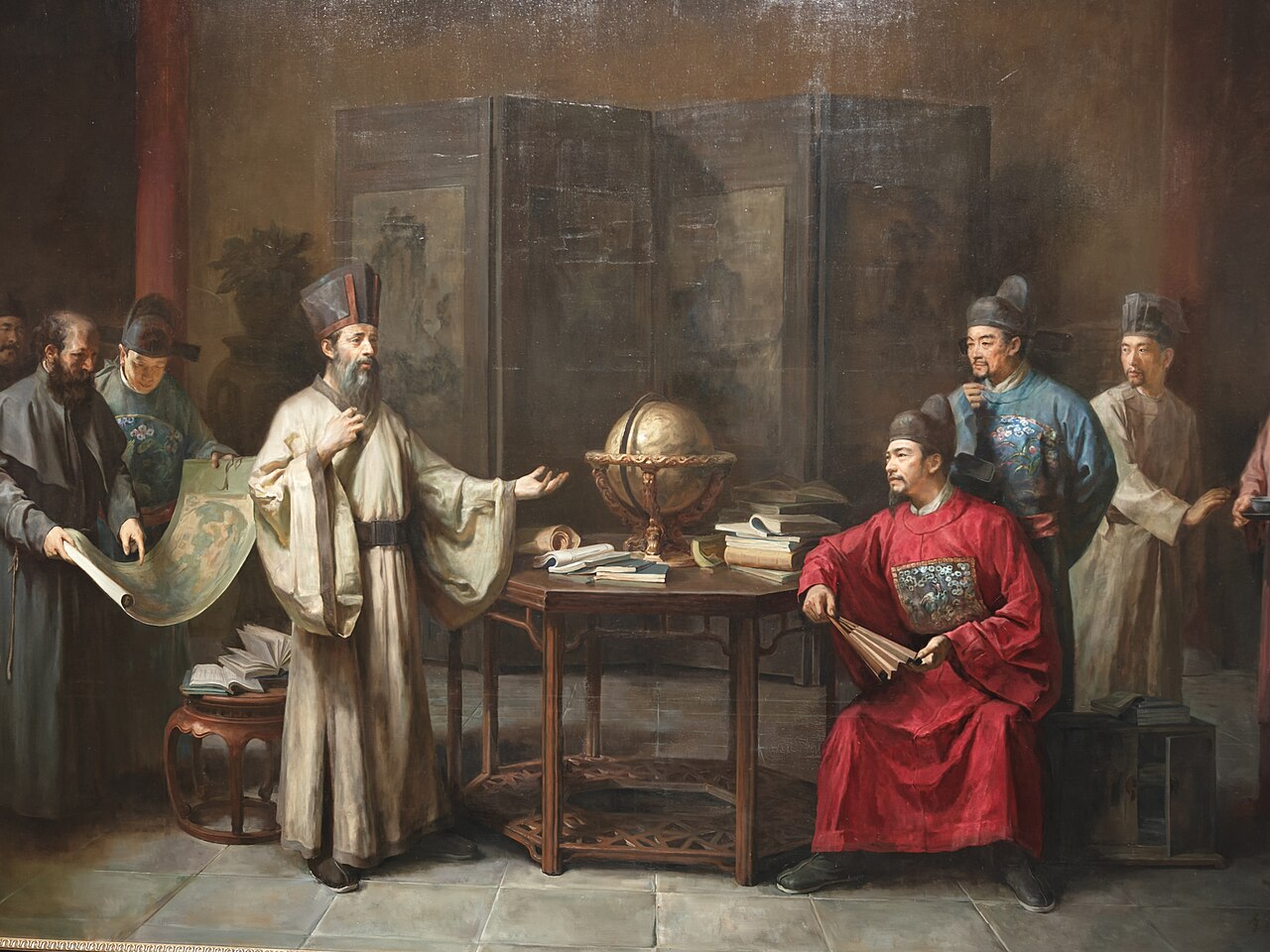
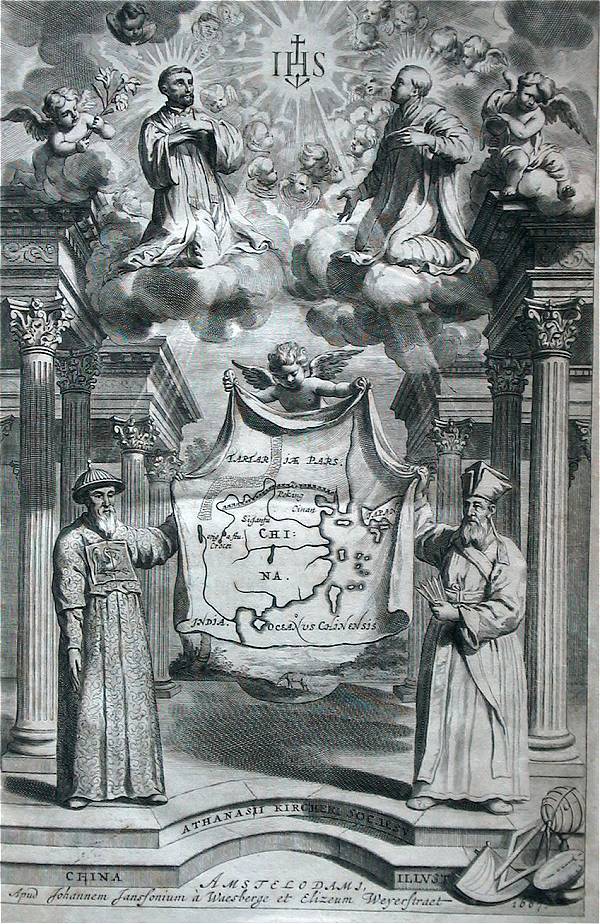
Ricci arrived at the Portuguese settlement of Macau in 1582 and began his missionary work in China. He mastered the Chinese language and writing system, and with Michele Ruggieri compiled a Portuguese-Chinese dictionary, the first in any European language. In 1583, he settled in Zhaoqing at the invitation of Governor Wang Pan, where in 1584 he composed the first European-style world map in Chinese, called 'Da Ying Quan Tu'. No prints of the 1584 map are known to exist, but of the much improved and expanded Kunyu Wanguo Quantu of 1602, six recopied, rice-paper versions survive. Expelled from Zhaoqing in 1588, he relocated to Shaoguan and reestablished his mission there. Further travels saw Ricci reach Nanjing and Nanchang in 1595. In August 1597, his superior Alessandro Valignano appointed him Major Superior of the mission in China, a charge he fulfilled until his death. He moved to Tongzhou in 1598 and first reached Beijing itself on 7 September 1598, but could not reach the Imperial Palace due to a Chinese intervention against the Japanese invasion of Korea. After waiting two months, he left Beijing. In 1601, Ricci was invited to become an adviser to the imperial court of the Wanli Emperor, the first Westerner to be invited into the Forbidden City. He established the Cathedral of the Immaculate Conception in Beijing, the oldest Catholic church in the city. Ricci was given free access to the Forbidden City but never met the reclusive Wanli Emperor, who granted him patronage with a generous stipend and supported Ricci's completion of the Zhifang Waiji, China's first global atlas.
Reader's Guide
Matteo Ricci's significance lies in his pioneering role as a cultural and scientific intermediary between Europe and Ming China. By mastering Chinese language and classical texts, he emphasized parallels between Catholicism and Confucianism while opposing Buddhism, and converted several prominent Chinese officials, including agronomist Xu Guangqi. His collaboration with Chinese elites produced the first Latin translations of Confucian classics and a Chinese translation of Euclid's Elements. His 1602 world map, Kunyu Wanguo Quantu, introduced European cartography to China. Ricci's approach of aligning with Confucian literati and adopting their dress set a precedent for Jesuit missions. He also became the first European to learn about the Kaifeng Jews, being contacted by a member of that community visiting Beijing in 1605; he never visited Kaifeng but sent a junior missionary there in 1608. The elderly Chief Rabbi of the Jews was ready to cede his power to Ricci, as long as he gave up eating pork, but Ricci never accepted the position. Ricci died on 11 May 1610 in Beijing, aged 57. The Wanli Emperor granted a burial plot in Beijing, designating a Buddhist temple for the purpose; Ricci's remains were transferred there in October 1610, now part of the Zhalan Cemetery. His legacy includes the recognition of his heroic virtue by the Apostolic See in 2022, making him a Venerable.
Did You Know?
- Ricci and Michele Ruggieri compiled a Portuguese-Chinese dictionary, the first in any European language; the manuscript was misplaced in the Jesuit Archives in Rome, rediscovered only in 1934, and published only in 2001.
- During the winter of 1598, Ricci and Jesuit colleague Lazzaro Cattaneo compiled another Chinese-Portuguese dictionary in which tones in Chinese syllables were indicated in Roman text with diacritical marks—unlike the earlier dictionary, this work has not been found.
- Ricci was the first European to learn about the Kaifeng Jews, contacted by a member of that community visiting Beijing in 1605; the elderly Chief Rabbi was ready to cede his power to Ricci if he gave up eating pork, but Ricci never accepted.
- Ricci never met the reclusive Wanli Emperor, though he was given free access to the Forbidden City and granted patronage with a generous stipend.
- Ricci's remains were granted a burial plot in Beijing by the Wanli Emperor, who designated a Buddhist temple for the purpose—an exception to the Ming code that foreigners who died in China had to be buried in Macau.
Linguistic Pioneer in a New World
When Matteo Ricci stepped off a ship in Macau in the summer of 1582, Christian presence in mainland China was virtually nonexistent beyond that small Portuguese trading post. What followed was a decade-long immersion into a civilization whose written language had stumped most foreign visitors. Ricci devoted himself to mastering both the Chinese script and Classical Chinese, a feat that placed him among the very first Western scholars to achieve such command. Alongside his colleague Michele Ruggieri, he journeyed into Guangdong's interior, settling in Zhaoqing from 1583 to 1589 at the invitation of a local governor who had heard of his mathematical and cartographic talents. During those years, the two men compiled what is believed to be the first Portuguese-Chinese dictionary ever produced in any European language, devising a novel system for rendering Chinese syllables in the Latin alphabet. That manuscript was lost in the Jesuit Archives in Rome for centuries, only to be rediscovered in 1934 and finally published in 2001. A second, more refined dictionary was assembled in the winter of 1598 with Lazzaro Cattaneo, this time using diacritical marks to indicate tonal distinctions, though that text has never been recovered.
Astronomer at the Imperial Court
In 1601, Ricci became the first European ever to cross the threshold of the Forbidden City in Beijing, summoned by the Wanli Emperor who valued his expertise in court astronomy and calendrical science. His accurate predictions of solar eclipses—events of enormous significance in the Chinese imperial worldview—were the primary credential that earned him this extraordinary access. Though the reclusive emperor never granted him a personal audience, he bestowed patronage upon Ricci, including a generous stipend and support for the completion of the Zhifang Waiji, recognized as China's first global atlas. Ricci was given free passage within the palace complex and used his position to establish the Cathedral of the Immaculate Conception, the city's oldest Catholic church. His cartographic legacy extends further: in 1584, while stationed in Zhaoqing, he produced the Da Ying Quan Tu, the first European-style world map rendered in Chinese characters, though no prints of that early version survive. The far more ambitious Kunyu Wanguo Quantu of 1602, written entirely in Chinese script, exists in six recopied rice-paper copies that remain to this day.
Bridging Two Intellectual Traditions
Once established in Beijing's cultural circles, Ricci pursued a deliberate strategy of theological dialogue rooted in common ground. He drew explicit parallels between Catholic doctrine and Confucian philosophy, presenting the two traditions as complementary rather than contradictory, while simultaneously taking a firm stand against Buddhism. This approach resonated with the literati elite, and he succeeded in converting several prominent Chinese officials to the Catholic faith. Among his most significant intellectual partnerships was his collaboration with Xu Guangqi, a leading agronomist and government figure, on a project of extraordinary scope: the translation of Euclid's Elements into Chinese and, for the first time in history, the rendering of the Confucian classics into Latin. These translations represented a genuine two-way exchange of knowledge between civilizations. Though he never traveled to Henan Province himself, he dispatched a junior missionary there in 1608, initiating a line of Jesuit engagement that would continue for generations.
Enduring Legacy and Posthumous Recognition
Ricci's influence on the Jesuit mission in China was foundational; in August 1597, his superior Alessandro Valignano elevated him to Major Superior of the entire Chinese mission with the rank and authority of a Provincial, a position he held until his death on 11 May 1610. His physical legacy persists in Zhaoqing, where a memorial plaque marks his six-year residence and a Ricci Memorial Centre occupies a building dating from the 1860s. The material traces of his scholarly work have proven remarkably durable: six recopied rice-paper copies of the 1602 Kunyu Wanguo Quantu survive, and the long-lost Portuguese-Chinese dictionary, misplaced in Roman Jesuit archives, was rediscovered in 1934 and published in 2001. Most significantly, in 2022 the Apostolic See formally recognized Ricci's heroic virtue, bestowing upon him the honorific title of Venerable—a step in the Catholic process toward sainthood acknowledging the extraordinary moral character of his life. This recognition, arriving more than four centuries after his death, testifies to the enduring resonance of a man who chose to learn an alien language, master its literary traditions, and build bridges between two great civilizations rather than simply imposing one upon the other.
Gallery



Frequently Asked Questions
Who is Matteo Ricci?
Matteo Ricci was an Italian Jesuit missionary born in Macerata in 1552 who devoted the second half of his life to living and working in Ming dynasty China. He is widely regarded as one of the principal architects of the Jesuit mission to China.
What is Matteo Ricci most famous for?
He is best known for producing the Kunyu Wanguo Quantu, a 1602 world map rendered in Chinese characters, and for becoming the first European to gain entry to the Forbidden City in Beijing in 1601. He also translated Euclid's geometric works into Chinese and rendered Confucian texts into Latin.
How did Matteo Ricci's life end?
Ricci passed away in Beijing on 11 May 1610, having lived out his final years within the Ming court. His death in China rather than in Italy underscores how deeply he had become embedded in Chinese intellectual and religious life.
Why is Matteo Ricci important to Catholic history?
He demonstrated that the Gospel could be communicated through the language of Chinese science, mathematics, and Confucian philosophy rather than through cultural dismissal. His approach laid the groundwork for centuries of cross-cultural Catholic engagement in East Asia.
What is Matteo Ricci's current status in the Catholic Church?
In 2022, the Apostolic See formally recognized his heroic virtue and granted him the title of Venerable, a step on the path toward beatification. He is not yet a saint but holds an official honorific within the Church.
More in Catholic Saints & Popes 1-24
Elsewhere in the Catholic Saints & Popes universe
Spotted an error? Know more?
This is a living reference — every entry is fact-audited, and reader corrections feed straight into our audit queue. Suggest an edit · See this site's audit record